Case study 02Mobile manipulation

evoBOT

Balancing locomotion and manipulation as one coupled system.

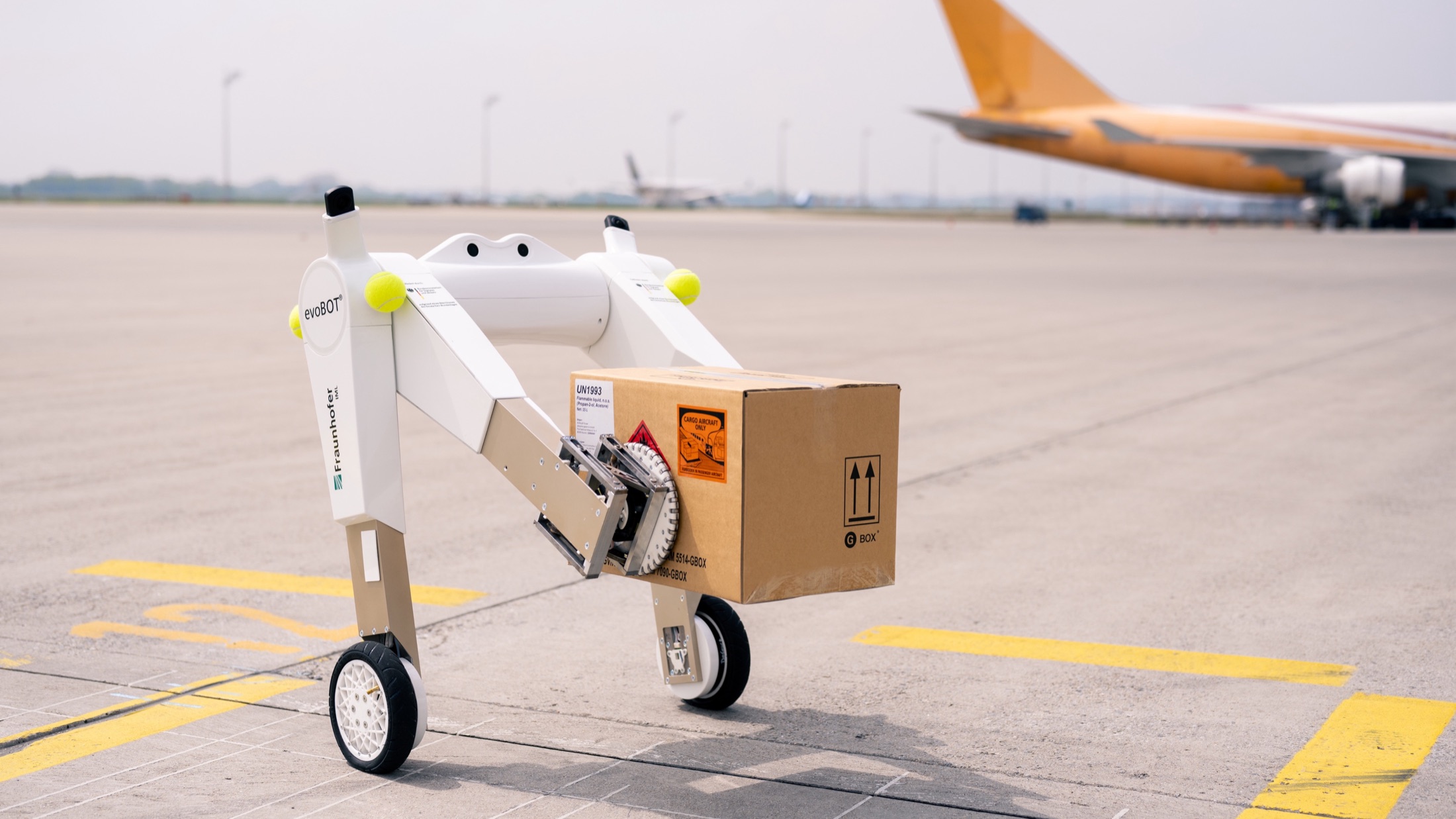
evoBOT transporting an air-cargo package on an airport apron.
evoBOT in an air-cargo application environment.Project archive

The platform

Dynamic stability meets active load handling.

evoBOT is a two-wheeled autonomous mobile robot based on the inverted-pendulum principle. Its compact chassis and side manipulators enable agile transportation, pickup, and active handover of loads.

2 wheels
dynamically stable chassis
2 arms
active load manipulation
IROS '23
peer-reviewed publication
100M+
reported public views

Attribution

Team achievement

A coupled multidisciplinary platform.

evoBOT was developed by a Fraunhofer IML team combining mechanics, electronics, sensing, actuation, control, learning-based methods, navigation, and manipulation. Individual components and later developments were created by multiple contributors.

My contribution

Leadership during core development.

I led the team during the first two years of evoBOT's core development. In that phase, I guided technical priorities and system integration and contributed directly to the robot's control-system work.

The control problem

Every movement changes the balance.

The chassis is inherently unstable. Manipulator motion disturbs balance, while chassis motion changes the manipulator's frame of reference. Useful behavior therefore depends on treating the complete robot as a coupled dynamic system.

Chassis
motion
Balance
control
Manipulator
motion

Public evidence

Research, invention, and field validation.

Fraunhofer documents the platform, its digital-twin and AI research, and trials in air-cargo environments. Published specifications differ by development version; the current project page reports up to 10 m/s.

Previous case studyLoadRunner